 Vijay Singh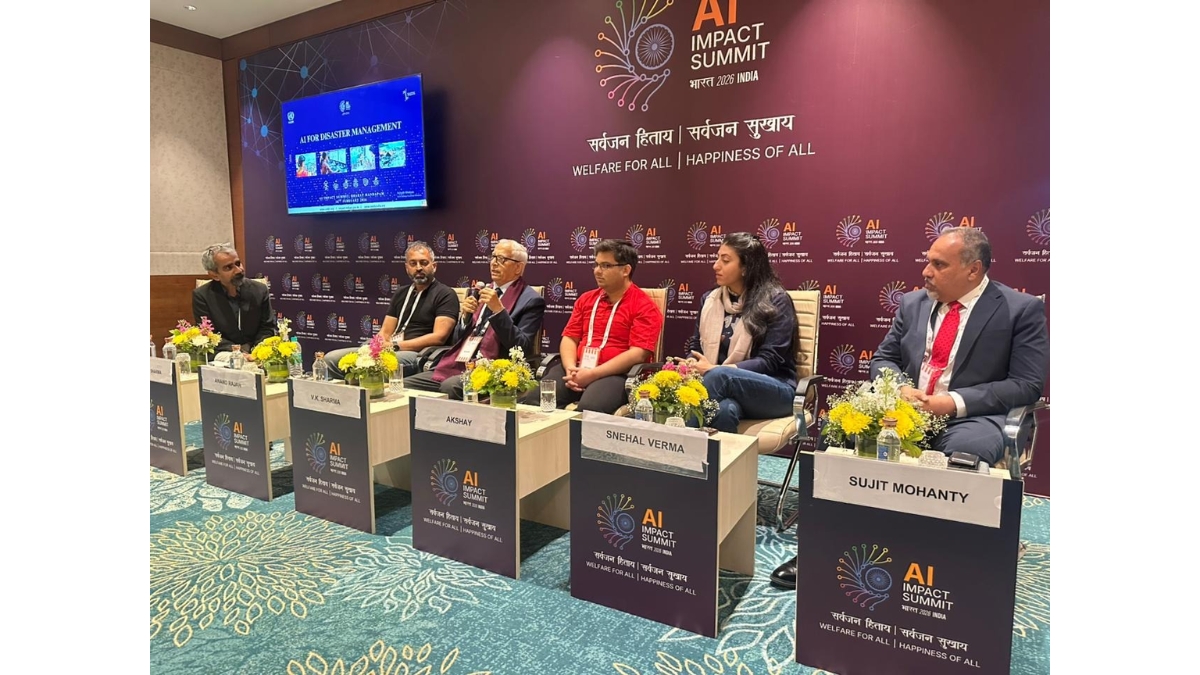
New Delhi [India], February 19: Policymakers, disaster risk leaders, technologists, and global experts came together on 16 February at Bharat Mandapam, New Delhi, for a high-level dialogue on AI for Disaster Management: Anticipatory, Hyperlocal, Scalable, hosted by SEEDS (Sustainable Environment and Ecological Development Society) in collaboration with the United Nations Office for Disaster Risk Reduction (UNDRR).
The session explored how artificial intelligence can help reframe disaster management from reactive response to continuous risk governance – integrating early warning, preparedness, response, and recovery into people-centred systems that strengthen decision-making and protect lives and livelihoods.
Moderator of the panel Dr. Anshu Sharma, brought together diverse perspectives from government, global institutions, and the technology ecosystem to examine how AI can move beyond pilots and dashboards toward solutions that governments can absorb, trust, and scale, while remaining inclusive and application-based.
Drawing on state-level experience, Prof. V.K. Sharma, Vice-Chairman of the State Disaster Management Authority, Sikkim, reflected on how the state rebuilt after the 2011 earthquake by embedding disaster resilience into every reconstructed asset – from homes and hospitals to public infrastructure. He highlighted the use of technology-enabled monitoring and vulnerability assessments to ensure accountability and resilience at scale, noting that the next step lies in moving from fragmented pilots to systematic application of AI across regions facing recurrent risk, particularly in the Himalayas and South Asia.
From a global governance perspective, Dr. Sujit Kumar Mohanty, Chief of Branch for Intergovernmental, Interagency Cooperation and Partnerships at UNDRR, underscored that while AI capabilities are advancing rapidly, their real value depends on institutional readiness. He emphasised that decision-makers – from district magistrates to national authorities – require legal frameworks, policies, and institutional capacity to act on AI-based insights. Without this enabling environment, even the most sophisticated tools risk remaining unused, he cautioned.
Representing the technology ecosystem, Akshay Zadgaonkar, Director at SavyCode, spoke about India’s distinct approach to AI – focused not on competing in large language model races, but on building context-specific, resource-efficient solutions.
He highlighted the potential of edge AI and lightweight “pocket models” that can function offline and on limited compute, enabling disaster risk applications in low-connectivity settings.
Focusing on equity and inclusion, Anand Rajan, Founder of Apurva.ai, emphasised that disaster risk and climate challenges cannot be addressed through averages alone. He argued for AI architectures that recognise long-tail vulnerabilities and treat communities as co-creators of solutions rather than passive beneficiaries, ensuring that the most vulnerable remain visible in decision-making systems.
Bringing in the perspective of nature-based and environmental intelligence, Snehal Verma, Co-founder of NatureDots, spoke about the role of foundational AI models in addressing disaster and climate risks in data-scarce regions. She articulated how hyperlocal, predictive insights – particularly in water and natural resource systems – can enable early action, reduce losses, and support both disaster preparedness and sustainable development.
Across the discussion, speakers stressed on the need to balance bottom-up community realities with top-down governance systems. AI, they noted, offers a bridge between contemporary scientific knowledge and community wisdom – supporting welfare for all and enabling resilient development pathways.
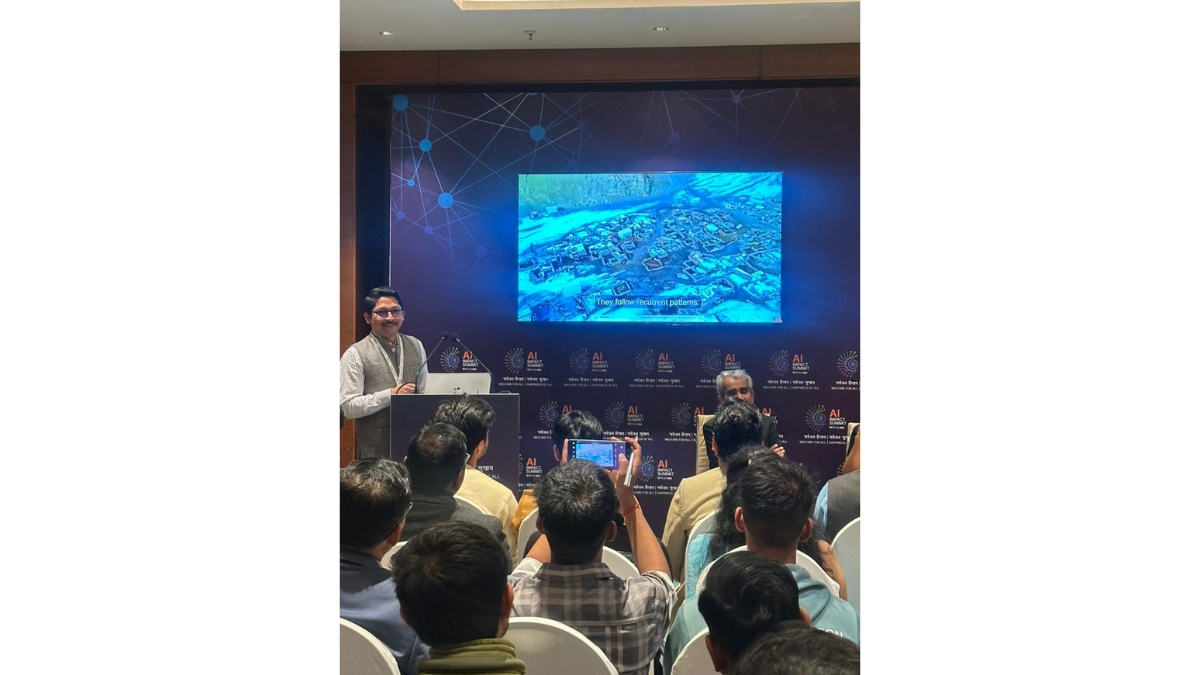
Building on these perspectives, Arijit Das, Regional Director – SEEDS, demonstrated how SEEDS is integrating AI into disaster resilience systems across India. Drawing from field experience, he showed how AI is driving a shift from reactive response to anticipatory, hyperlocal, and scalable risk management. The presentation outlined how combining weather data, satellite imagery, and vulnerability indicators can predict risk at the asset and community level, allowing early action. He added that AI must move beyond simply layering technology onto existing systems to fundamentally reshaping how risk is understood and acted upon. AI-supported assessments can also deliver near real-time damage insights, leading to faster recovery and response.
The session concluded with a shared call to move beyond isolated innovations toward integrated, people-centred risk governance systems, positioning India’s experience as globally relevant in an era of escalating climate and disaster – driving solutions that are both inclusive and application-based.
About SEEDS
SEEDS (Sustainable Environment and Ecological Development Society) is a leading non-profit organization with over three decades of experience in building resilience among communities vulnerable to disasters and the impacts of climate change. Combining innovative technologies with traditional wisdom, SEEDS designs and implements solutions that strengthen disaster preparedness, response, and recovery. With a special focus on marginalized groups, the organization works closely with local governments and community networks to equip people with the knowledge and resources needed to face future risks with confidence.
For media inquiries, please contact:
Sushmita Malaviya
Associate Director, Strategic Communications and Marketing, SEEDS
sushmita@seedsindia.org
+91 9717243131
If you object to the content of this press release, please notify us at pr.error.rectification@gmail.com. We will respond and rectify the situation within 24 hours.