 Vijay Singh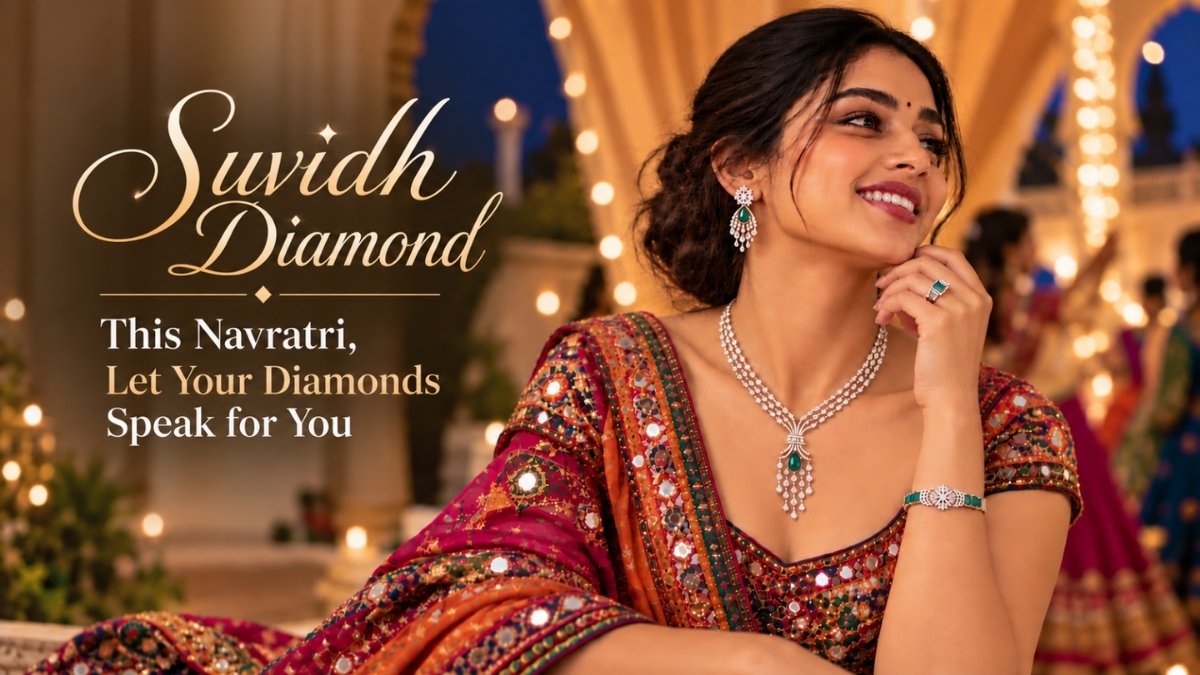
New Delhi [India], October 8: A few years ago, there was a fairly predictable answer to the question: “What jewellery are you wearing for Navratri?”
Something traditional.
This year, that answer is getting harder to predict.
A woman might wear a heavily embroidered chaniya choli with nothing more than a pair of diamond studs. Someone else might pair a contemporary necklace with a traditional outfit. Another might skip the elaborate jewellery altogether and choose one statement piece that becomes the centre of the entire look.
The interesting part?
Traditional jewellery isn’t disappearing.
What is changing is the reason people are choosing what they wear.
Navratri Has Always Been About Dressing Up. But Dressing Up Has Changed.
Nine nights. Nine colours. Hours of garba.
Navratri has never been just about the dance. It is also about what you wear while you dance, the photographs that follow, and the friends and family you celebrate with.
For generations, the occasion decided the jewellery, and tradition decided the style. You wore what the festival, and often the family, expected.
Today, festive fashion is far more individual.
People mix traditional and contemporary clothing. They style the same outfit in different ways. They repeat their favourite pieces without a second thought.
Jewellery has followed the same path.
The question is no longer simply:
“What is appropriate for Navratri?”
It is increasingly:
“What works with my style?”
Tradition Hasn’t Gone Anywhere. It Has Become More Flexible.
This is not a story about traditional jewellery losing its place.
In fact, traditional pieces remain deeply connected to festivals and family celebrations.
The difference is that they are no longer the only definition of a festive look.
A traditional necklace can be paired with a modern outfit. A classic diamond bracelet can sit comfortably beside colourful festive clothing. A pair of understated earrings can sometimes say more than an entire set of elaborate jewellery.
The rules have become less rigid.
And that gives people something they didn’t always have before:
choice.
Jewellery Is Becoming Part of the Personality
Think about the jewellery people remember.
Sometimes, it isn’t the biggest necklace in the room.
It is the earrings someone always wears.
The ring that has quietly become part of their everyday style.
The pendant they received for a special occasion and somehow started wearing everywhere.
These pieces become personal because they are not restricted to one particular celebration.
That is where the relationship between jewellery and fashion is changing.
Jewellery is increasingly being selected not just for the occasion, but for the person wearing it.
Someone who prefers minimal fashion may want a delicate diamond piece even during Navratri.
Someone who loves statement looks may choose something bold.
Someone who enjoys mixing old and new may combine an inherited piece with contemporary jewellery.
There is no single “festive jewellery look” anymore.
The Diamond Doesn’t Always Need a Milestone Anymore
For a long time, diamonds were strongly associated with life’s biggest moments.
Engagements.
Weddings.
Anniversaries.
Milestones worth remembering.
Those moments still matter.
But diamonds are increasingly finding their way into smaller, more personal moments too.
A first major achievement. A gift to oneself. A family celebration. Or simply a piece chosen because it feels right.
Navratri is a celebration, but it is also an opportunity to express yourself.
And when jewellery becomes part of that expression, the piece doesn’t necessarily need to be elaborate.
It needs to feel right.
This Is Where Modern Jewellery Buying Gets Interesting
The jewellery industry has traditionally spoken a lot about occasions.
But customers are increasingly thinking about versatility.
Can I wear it beyond Navratri?
Will it work with Western as well as Indian outfits?
Does it feel like something I would actually wear?
Can this become one of those pieces I reach for again and again?
People are still buying with care. They are simply defining value differently.
A piece can be valuable because of its craftsmanship, its diamonds, its design or its emotional significance.
But increasingly, there is another measure:
How naturally does it become part of my life?
For Suvidh Diamond, This Shift Makes Jewellery More Personal
For a diamond jeweller, this changes the question worth asking.
It is no longer only, “What suits the festival?”
It is also, “What will this person still love wearing long after the festival is over?”
That is a different way of looking at jewellery. A piece isn’t made for one night of garba or one family photograph. It is made to be worn again, with a saree one day and a shirt the next.
Diamonds suit this well. They are made to last, so they can carry more than one occasion, and more than one version of the person wearing them.
This perspective also shapes how Suvidh Diamond approaches diamonds and jewellery.
The goal isn’t only to make pieces for a festival, but to help people find jewellery that fits their style rather than just the calendar.
Because the future of festive jewellery may not belong to the piece that looks the most traditional.
Nor necessarily to the one that looks the most modern.
It may belong to the piece that feels like yours.
Maybe That’s the Real Change This Navratri
Navratri hasn’t become less traditional.
People haven’t stopped valuing the jewellery, clothing and rituals that connect them to their culture.
They have simply started adding something else to the equation:
themselves.
And perhaps that is why this year’s festive jewellery feels different.
The colours may still be traditional.
The celebrations may still follow generations-old customs.
The music may still bring everyone onto the dance floor.
But what someone chooses to wear?
That increasingly tells a story of their own.
Because tradition tells us where we come from. Personal style tells the world who we are today. Please Visit : https://www.suvidhdiamond.com/
If you object to the content of this press release, please notify us at pr.error.rectification@gmail.com. We will respond and rectify the situation within 24 hours.