 Vijay Singh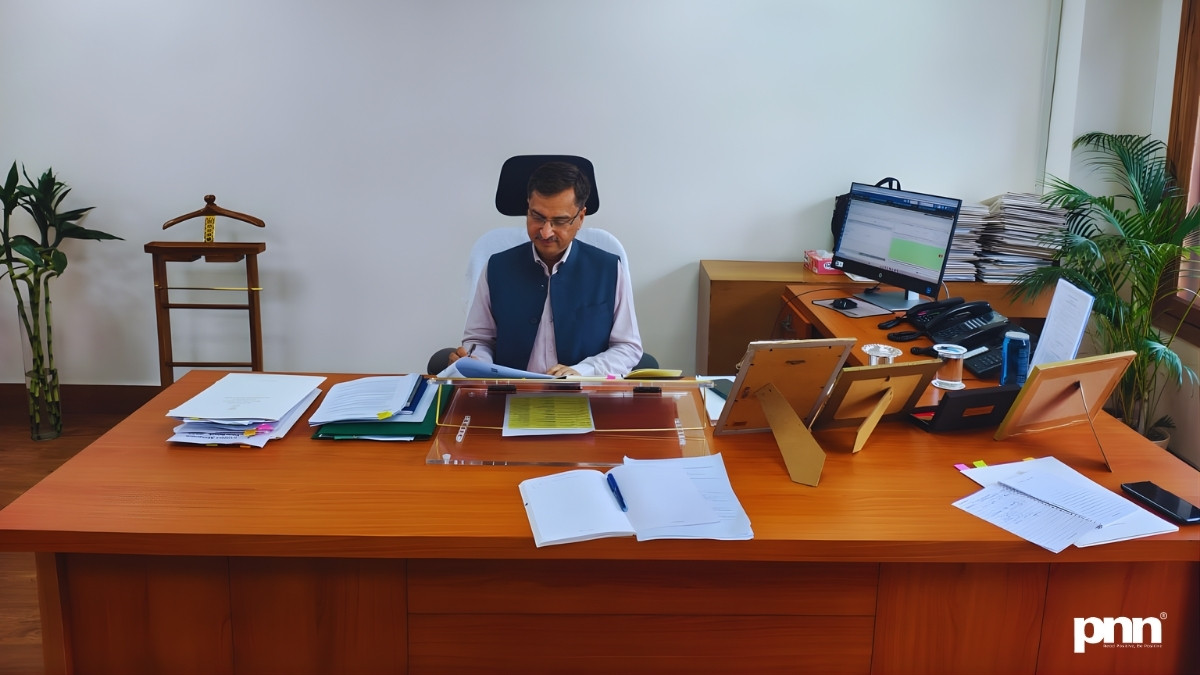
New Delhi [India], January 20: Big decisions rarely make noise. The 65th CGPB meeting in New Delhi on January 21, 2026, is one of those quiet rooms where India’s mineral future gets written.
The Geological Survey of India, under the Ministry of Mines, is hosting the 65th Central Geological Programming Board meeting at the A. P. Shinde Symposium Hall, ICAR, Pusa. The date matters. So does the guest list. This is where national priorities meet rock-solid data.
At the helm is Shri Piyush Goyal, Secretary, Ministry of Mines. Joining him are Shri Asit Saha, Director General of GSI, and Shri Sanjay Lohiya, Additional Secretary, Ministry of Mines. Around them sits a rare mix of policymakers, state geological departments, PSUs, private explorers, academics, and industry hands. Not ceremonial. Operational.
The wait is almost over. 1 day to go
Get ready to witness planning that strengthens mineral security, sustainability, and the geoscientific future. Stay tuned for insightful presentations and brain storming sessions at the 65th CGPB Meeting, New Delhi.Watch us Live on… pic.twitter.com/a6annTLGto
— Geological Survey of India (@GeologyIndia) January 20, 2026
The CGPB is not a conference for PowerPoint tourism. It is the apex planning forum of the Geological Survey of India. Every year, GSI places its Annual Field Season Programme before this board. The goal is simple and ruthless. Avoid duplication. Align effort. Spend public money where it counts.
States, central ministries, exploration agencies, PSUs, and private entrepreneurs come with proposals. They ask for collaboration. They flag gaps. They challenge assumptions. Then the board decides.
Based on government priorities and the urgency of proposals, GSI’s Annual Programme takes final shape. Survey and mapping. Mineral exploration. Research and development. Multidisciplinary societal projects. Training and capacity building. All of it flows through this room.
This edition carries extra weight. India’s mineral conversation has shifted. Clean energy is no longer a slogan. It is a supply chain problem.
The 65th CGPB meeting puts critical minerals front and centre. Lithium. Rare earth elements. Graphite. Platinum group elements. Vanadium. Scandium. Cesium. These are not academic curiosities. They are the backbone of batteries, electronics, defence systems, and renewable infrastructure.
For India, the linkage is direct. Energy transition. Atmanirbhar Bharat. Strategic autonomy. No imported shortcuts.
One of the core focus areas of the 65th CGPB meeting is exploration strategy for critical and strategic minerals. India needs speed, but not chaos.
Discussions will align exploration targets with national energy and manufacturing goals. The emphasis is on systematic, science-led discovery rather than scattered drilling. It is about moving faster without cutting corners.
This also means identifying regions where India can realistically build domestic supply chains, not just publish reports.
Another sharp pivot is technology adoption. The meeting will examine how modern exploration tools are being integrated into GSI’s workflow.
AI and machine learning-based data integration will take centre stage. Not as hype, but as decision support. Add to that geophysical surveys, hyperspectral remote sensing, deep drilling programmes, and mineral system studies. The idea is to see deeper, faster, and smarter.
India has the data. The challenge is integration. The 65th CGPB meeting aims to fix that.
One quiet but critical theme is pre-competitive data sharing. Exploration in silos wastes time and money. The CGPB platform pushes collaborative models, especially for critical and strategic minerals.
Sharing baseline geoscience data allows explorers to focus on value creation rather than repetition. It also accelerates the journey from early-stage exploration to auction-ready mineral blocks. For a country trying to unlock resources responsibly, this matters.
Minerals are not the only concern. The 65th CGPB meeting will also address landslide hazard zonation and slope stability studies.
This is particularly relevant for Himalayan and North Eastern states, where development, climate stress, and fragile geology collide. Disaster risk reduction is not optional. GSI’s role here is foundational, mapping risk before tragedy strikes.
A major highlight will be the presentation of GSI’s Annual Programme for the Field Season 2026–27. The scale is hard to ignore. A total of 1,068 peer-reviewed projects across earth science disciplines.
Mineral exploration dominates the list. But the programme also expands into carbon sequestration studies, offshore exploration, and public good geosciences. Sustainability is not an appendix. It is baked in.
Every project has been scrutinised. This is not volume for optics. It is prioritised science.
The meeting will also see the release of key GSI publications by the dignitaries. Alongside, an exhibition will showcase GSI’s work, with a strong focus on strategic and critical mineral exploration.
For stakeholders, this is a rare window into the scale and depth of India’s geoscientific machinery.
The CGPB has always been about coordination. This year, it is about alignment. National priorities with global sustainability goals. Resource security with environmental responsibility.
The 65th CGPB meeting is not flashy. It does not need to be. It is where India quietly decides how serious it is about owning its mineral future.